
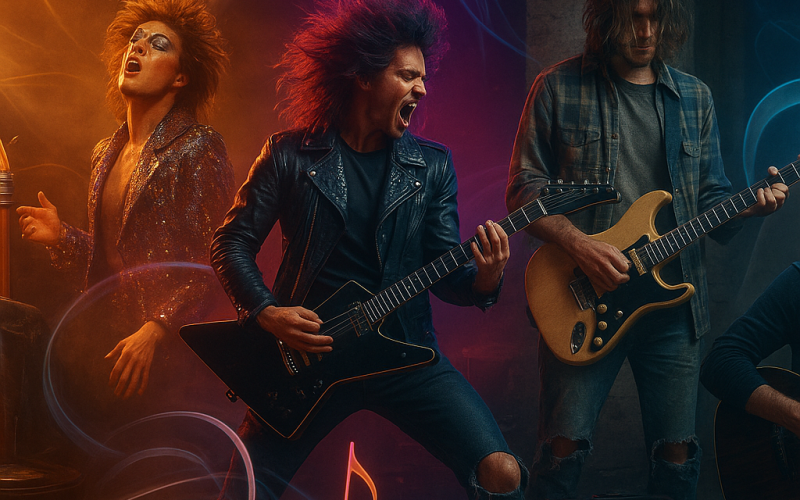
Rock music has never stood still. From its earliest roots in the late 1940s and early 1950s to the sprawling, genre-defying landscape of today, rock has constantly reinvented itself — splintering, evolving, and sometimes circling back to its own origins in surprising ways. Understanding how rock subgenres developed across the decades isn’t just an exercise in music history; it’s a window into the cultural, political, and technological shifts that shaped entire generations.
Whether you’re a lifelong fan trying to trace the lineage of your favorite band or a curious newcomer trying to make sense of why “punk” and “prog rock” feel like completely different universes, this deep dive into rock’s evolutionary timeline has something for you.
The Birth of Rock: Where It All Began (1950s)
Rock ‘n’ roll didn’t appear out of thin air. It grew directly from a rich blend of African American musical traditions — blues, gospel, and rhythm and blues — fused with country music and Western swing. Artists like Chuck Berry, Little Richard, and Elvis Presley didn’t just create hits; they created a template that virtually every rock subgenre since has built upon or actively rebelled against.
The electric guitar became the instrument of the era, and with it came a new kind of energy. Songs were louder, faster, and more emotionally direct than the polished pop of the time. Rhythm was front and center. This raw, electrified sound was the seed from which an entire forest of subgenres would eventually grow.
By the late 1950s, rock ‘n’ roll had already started to fragment. Rockabilly — a more twangy, country-influenced variation — emerged with artists like Carl Perkins and Jerry Lee Lewis. Meanwhile, the smoother, more commercialized side of early rock laid the groundwork for what would later be called pop rock. Even in its infancy, rock was restless.
The 1960s: Explosion and Experimentation
If the 1950s planted the seed, the 1960s made it explode. The decade saw rock evolve at a pace that’s almost difficult to comprehend in retrospect. In just ten years, the genre went from the relatively straightforward sounds of early British Invasion bands to the mind-bending complexity of psychedelic rock.
British Invasion and the Rise of Rock Bands
When The Beatles landed in America in 1964, rock music changed overnight. The British Invasion — which also brought bands like The Rolling Stones, The Kinks, and The Who — introduced a new level of songwriting sophistication and group dynamics. These weren’t just backing musicians supporting a lone star; they were bands, with distinct personalities and creative identities.
The garage rock movement ran parallel to this, particularly in the United States. Bands like The Sonics and ? and the Mysterians stripped rock back to its bare, noisy essentials — a raw, lo-fi approach that would directly influence punk rock more than a decade later.
Psychedelic Rock and the Counterculture
By the mid-to-late 1960s, the counterculture movement had fully infiltrated rock music. Psychedelic rock emerged as bands began experimenting with longer song structures, unusual time signatures, Eastern musical influences, and studio techniques that were entirely new at the time. The Beatles’ Sgt. Pepper’s Lonely Hearts Club Band (1967), Jimi Hendrix’s Are You Experienced, and Jefferson Airplane’s Surrealistic Pillow all captured this era’s spirit of boundary-pushing exploration.
This period also saw the seeds of heavy metal being planted. The Jimi Hendrix Experience, Cream, and early Led Zeppelin were pushing volume, distortion, and aggression to new extremes — setting the stage for what was coming in the 1970s.
The 1970s: Diversification and Dominance
The 1970s were arguably the most important decade for the diversification of rock subgenres. It’s the era when rock truly became many different things at once — and when some of its most lasting and beloved subgenres were born.
Hard Rock and Heavy Metal
Led Zeppelin, Black Sabbath, and Deep Purple defined the sound of heavy rock in the early 1970s. Black Sabbath, in particular, is widely credited with essentially inventing heavy metal as a distinct genre — their down-tuned guitars, dark lyrical themes, and crushingly slow tempos were unlike anything rock had produced before. By the mid-to-late 1970s, acts like Judas Priest and KISS had further codified metal’s visual and sonic identity.
Progressive Rock: Ambition Unleashed
Progressive rock — or “prog” — represented rock’s most ambitious intellectual leap. Bands like Yes, Genesis, King Crimson, and Pink Floyd created sprawling, multi-part compositions that drew from classical music, jazz, and even theatrical traditions. Albums like The Dark Side of the Moon (1973) and Tales from Topographic Oceans (1973) were concept albums that demanded to be listened to as complete works, not just collections of singles.
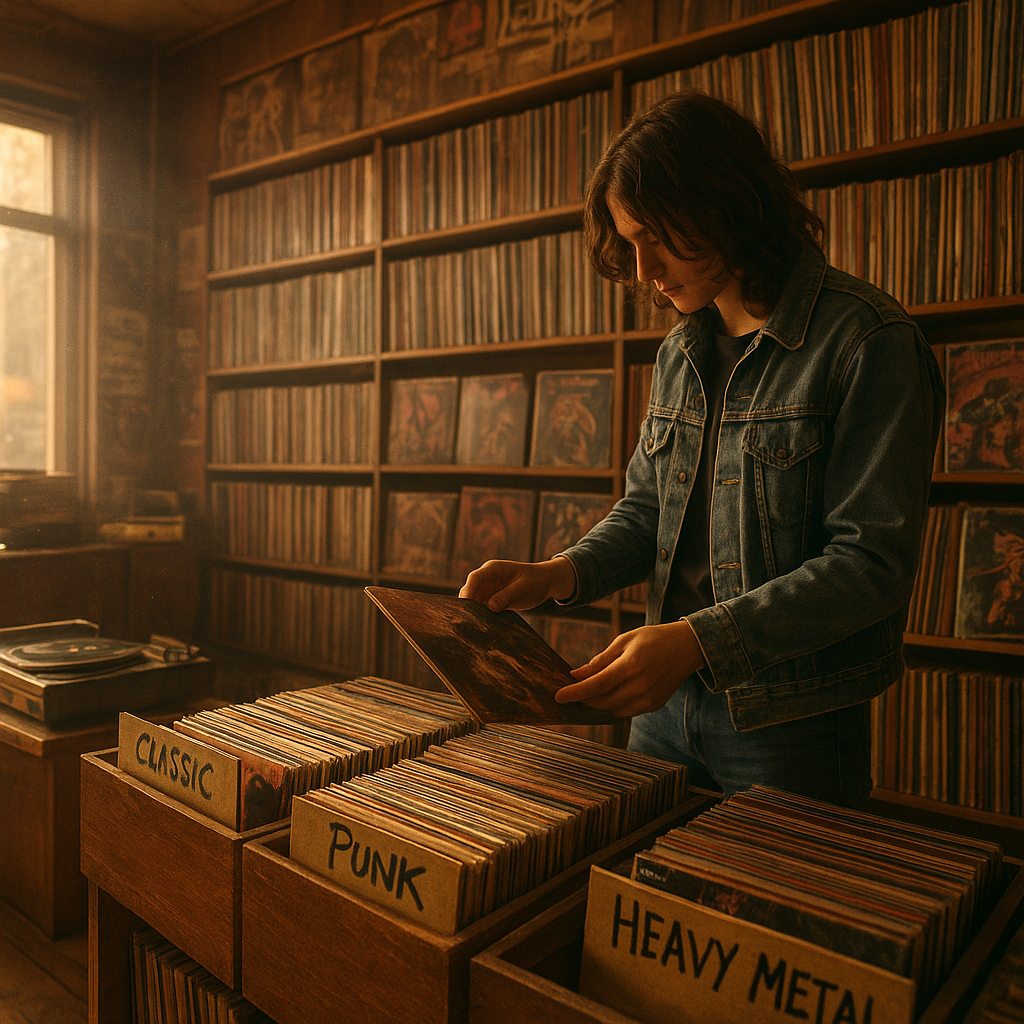
Prog rock demonstrated that rock musicians could be serious artists — but it also provoked a massive backlash.
Punk Rock: A Deliberate Rejection
By 1976 and 1977, punk rock arrived as a direct reaction to what many felt was the overblown excess of prog and arena rock. The Ramones in New York and The Sex Pistols and The Clash in London stripped everything back — short songs, three chords, aggressive delivery, and an intensely anti-establishment attitude. Punk wasn’t just a musical style; it was a philosophy. It democratized rock by insisting anyone could do it. The origins and influences of punk run deeper than most people realize, stretching back through garage rock and the broader countercultural upheavals of the decade.
The 1980s: Mainstream Domination and Underground Rebellion
The 1980s brought rock music to its commercial peak — and simultaneously sparked some of its most passionate underground movements. MTV launched in 1981 and transformed how rock music was consumed, making image as important as sound for the first time in a truly mainstream way.
Glam metal (also called hair metal) dominated the charts with bands like Mötley Crüe, Bon Jovi, Def Leppard, and Guns N’ Roses. The sound was big, polished, and radio-friendly, with an emphasis on anthemic choruses and flamboyant visuals. At its commercial peak, glam metal was essentially pop music with distorted guitars.
Underground, however, a different story was unfolding. Post-punk evolved from punk’s raw energy into something more atmospheric and experimental — bands like Joy Division, The Cure, and Siouxsie and the Banshees explored darker, more introspective territory that would eventually be labeled gothic rock. Meanwhile, the American hardcore punk scene — with bands like Black Flag, Minor Threat, and Dead Kennedys — pushed aggression and political messaging to new extremes.
Alternative rock also began coalescing in the 1980s as an umbrella term for guitar-based music that existed outside the mainstream. R.E.M., The Replacements, and Hüsker Dü were key figures in defining what “alternative” actually meant before it became a marketing category.
The 1990s: Grunge, Britpop, and the Alternative Mainstream
Few moments in rock history are as dramatic as the arrival of grunge in the early 1990s. When Nirvana’s Nevermind was released in September 1991, it genuinely changed the commercial landscape overnight. Grunge — developed in Seattle with bands like Nirvana, Pearl Jam, Soundgarden, and Alice in Chains — combined punk’s raw aggression with heavy metal’s guitar weight and added a distinctly introspective, often emotionally raw lyrical sensibility.
The impact was immediate: glam metal virtually vanished from radio playlists within a year. Alternative rock became the dominant mainstream genre, a remarkable reversal of fortune. Moments like these are part of a much larger story — one that spans decades of rock’s musical evolution and continues to reshape how we understand the genre’s trajectory.
In the UK, Britpop offered a different response — a celebration of classic British rock influences filtered through a distinctly 1990s lens. Oasis, Blur, Pulp, and Suede drew from The Beatles, The Kinks, and early 1970s glam rock, creating music that felt both nostalgic and fresh.
The decade also saw the continued growth of indie rock as a distinct aesthetic — characterized not just by independent record label status, but by a certain lo-fi, emotionally earnest approach. Bands like Pavement, Guided by Voices, and Neutral Milk Hotel built devoted followings without significant mainstream exposure.
The 2000s and 2010s: Fragmentation in the Digital Age
The internet fundamentally changed how rock subgenres developed and spread. Rather than being defined by geographic scenes or major label investment, subgenres could now emerge from anywhere and find global audiences almost immediately.
The early 2000s saw a significant garage rock revival, led by bands like The Strokes, The White Stripes, and The Hives — all of whom stripped rock back to its raw, essential form and generated genuine mainstream excitement. At the same time, post-hardcore and emo became enormously popular with younger audiences, with bands like Thursday, Saves the Day, and eventually My Chemical Romance bringing intensely emotional rock music to a massive audience.
Indie rock continued to expand and diversify throughout the 2000s, with artists like Arcade Fire, Sufjan Stevens, and Fleet Foxes blending rock with folk, orchestral arrangements, and experimental approaches. The definition of “indie rock” became increasingly elastic — more of a vibe than a specific sound.
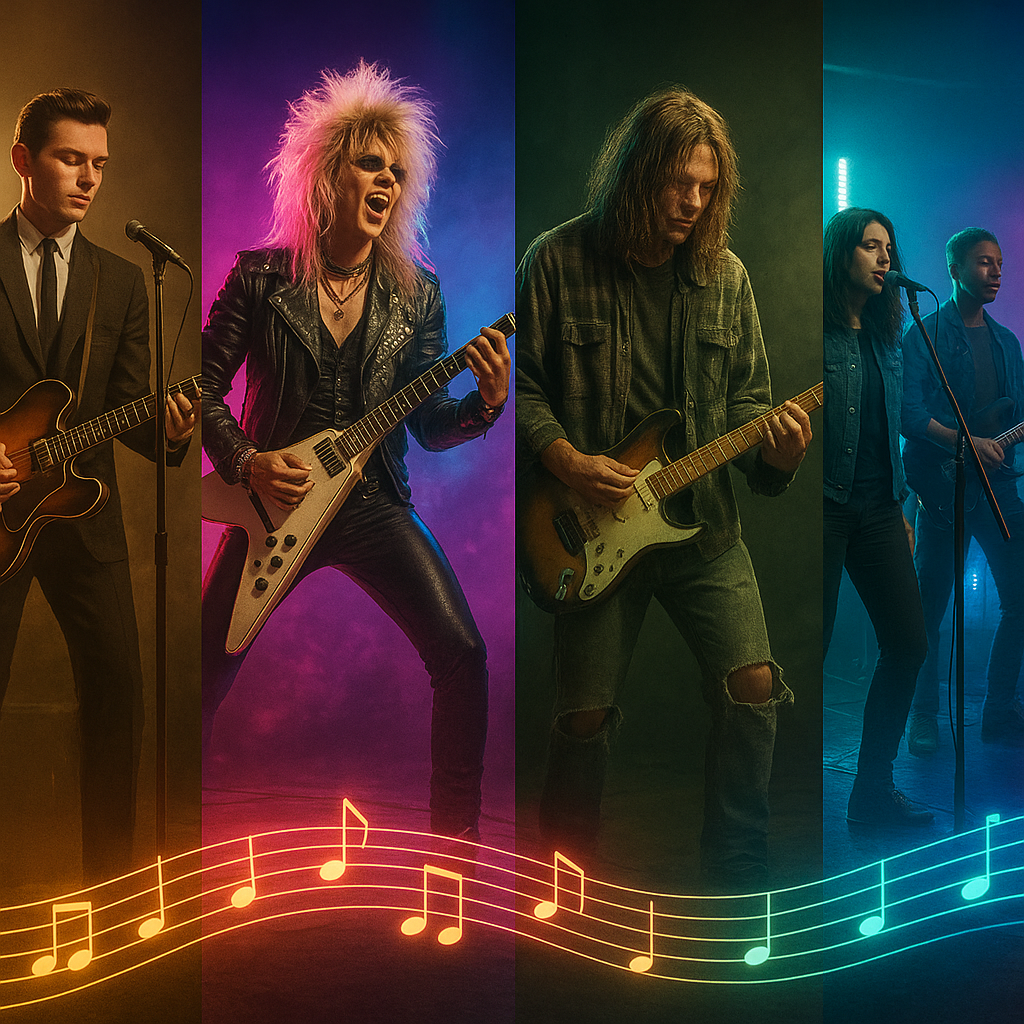
By the 2010s, rock had begun to occupy a more complicated position in the mainstream music landscape. Hip-hop and pop dominated streaming charts, and while rock remained enormously popular globally, it had lost its position as the undisputed center of popular culture. Subgenres continued to multiply: math rock, post-rock, shoegaze revivals, stoner rock, doom metal — each with devoted communities and distinct aesthetics.
Rock Subgenres in the 2020s: Where Things Stand Now
Contemporary rock exists in a fascinatingly fragmented state. Younger artists are approaching the genre without the same genre boundaries that defined previous generations. Bands like Wet Leg, Yard Act, and Amyl and the Sniffers have brought fresh energy to post-punk-influenced rock, while artists like Phoebe Bridgers blur the lines between indie rock and folk in ways that challenge easy categorization.
Meanwhile, metal continues to thrive in countless subforms — blackgaze, djent, progressive metalcore — often appealing to highly specific but globally connected fan communities who find each other through streaming platforms and social media rather than local record stores or regional scenes.
The question of what counts as rock music has never been more genuinely open. And arguably, that openness is a sign of vitality rather than confusion.
What Makes Rock Music So Enduring?
Rock music’s ability to keep reinventing itself comes down to a few core qualities that have remained consistent even as everything else changed:
- The electric guitar as a vehicle for expression — few instruments allow for the same range of emotional intensity, from delicate fingerpicking to skull-rattling distortion
- A spirit of rebellion and authenticity — even in its most commercial forms, rock has always maintained a relationship with the idea of saying something real
- Community and identity — rock subgenres aren’t just musical categories; they’re tribes, complete with shared aesthetics, values, and histories
- Live performance as a central experience — rock has always been music that lives and breathes in a room with an audience in a way that studio recordings can only partially capture
Frequently Asked Questions About Rock Subgenres
How many rock subgenres are there?
There’s no definitive count, but music databases like AllMusic and Discogs list well over 100 distinct rock subgenres and microgenres. The number continues to grow as artists blend influences in new ways and as online communities develop increasingly specific shared tastes.
What is the difference between rock and alternative rock?
“Alternative rock” originally described guitar-based music that existed outside the mainstream commercial system — on independent labels, outside heavy radio rotation. By the 1990s, however, alternative rock had become so commercially successful that the term became somewhat paradoxical. Today, it generally refers to a broad category of rock music with a more introspective or unconventional approach compared to classic arena rock or heavy metal.
What came first: punk or heavy metal?
Heavy metal as a distinct genre developed slightly earlier, with Black Sabbath’s debut album in 1970 often cited as the starting point. Punk rock emerged primarily between 1974 and 1977. However, both genres share common ancestors in the aggressive, distortion-heavy rock of the late 1960s.
Conclusion: Rock’s Story Is Still Being Written
The evolution of rock subgenres across the decades is ultimately a story about music’s remarkable capacity for self-renewal. Every time rock seemed to calcify into formula — whether in the overblown pomp of late 1970s arena rock or the polished excess of 1980s glam metal — a new generation arrived to tear it down and rebuild something fresh from the rubble.
From the raw simplicity of 1950s rock ‘n’ roll to the intricate genre hybrids of the 2020s, the common thread is an insistence on emotional honesty and sonic energy. The instruments, production techniques, and cultural contexts have changed enormously — but the core impulse has stayed remarkably consistent.
Rock subgenres aren’t just chapters in a history book; they’re living traditions that continue to shape new music every day. Understanding where they came from makes the music itself richer, stranger, and more rewarding to listen to.