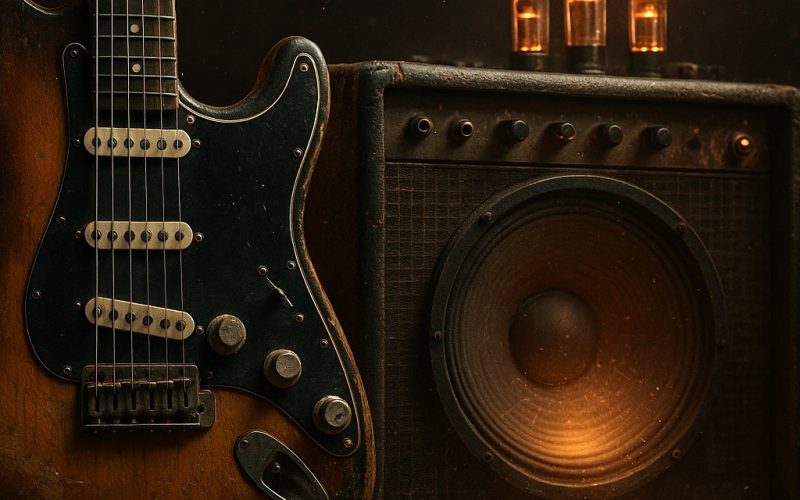
Picture this: it’s 1951, and a guitarist named Willie Kizart shows up to a Memphis recording session with an amplifier that got damaged on the drive over. The speaker cone is torn, rattling, producing a fuzzy, aggressive buzz that should have ruined the session. Instead, producer Sam Phillips hears something magical in that broken sound — and rock and roll is never the same again.
That accidental moment on “Rocket 88” by Jackie Brenston and His Delta Cats didn’t just create a hit record. It planted the seed for what would become the single most important sonic innovation in rock music history: guitar distortion. From blues clubs to stadium anthems, from garage punk to heavy metal, distortion became the voice of rebellion, power, and raw emotion.
But how did a broken amplifier transform into the foundation of modern rock? Who actually invented distortion on guitar? And why does that gritty, overdriven tone still give us chills decades later? Let’s dive into the electrifying story of how guitar distortion rewired rock music forever.
The Accidental Birth of Distortion: When Broken Equipment Changed Everything
Before distortion became a deliberate artistic choice, it was literally a technical malfunction. In the early days of electric guitar, amplifiers were designed to produce clean, pristine tones. Musicians wanted clarity, warmth, and fidelity — the exact opposite of what we now associate with rock guitar.
The story of “Rocket 88” is now legendary. When Willie Kizart’s amp was damaged (some accounts say it fell off the roof of the car, others say it was dropped), the torn speaker cone created a distorted, fuzzy sound that Sam Phillips decided to keep. The result was a raw, aggressive guitar tone that perfectly matched the song’s driving energy.
But Kizart wasn’t the only pioneer. Around the same time, blues guitarist Guitar Slim (Eddie Jones) was pushing his amplifiers to their limits, creating natural overdrive by cranking the volume way past their intended capacity. His 1954 hit “The Things That I Used to Do” featured a gritty, distorted tone that influenced countless guitarists, including a young Jimi Hendrix.
Why Did Early Distortion Sound So Good?
There’s actual science behind why those early distorted tones were so compelling. When a tube amplifier is pushed beyond its clean capacity, it creates harmonic overtones and compression that our ears perceive as warm, rich, and powerful. Unlike the harsh clipping of a solid-state amp pushed too hard, tube overdrive produces even-order harmonics that are musically pleasing.
This natural compression also adds sustain, allowing notes to ring out longer and sing with more emotion. It’s no wonder guitarists started intentionally seeking out that “broken” sound.
From Accident to Intention: The 1960s Distortion Revolution
By the early 1960s, guitarists weren’t waiting for their equipment to break — they were breaking it on purpose. Dave Davies of The Kinks famously slashed his amplifier’s speaker cone with a razor blade to achieve the aggressive, distorted tone on “You Really Got Me” (1964). That song’s raw, fuzzy guitar riff became a blueprint for hard rock and heavy metal.
Meanwhile, session guitarist Grady Martin accidentally created one of the most famous distortion sounds in history during a 1960 recording session for Marty Robbins’ “Don’t Worry.” A faulty mixing console channel produced a fuzzy, bass-heavy tone on Martin’s guitar solo. Rather than re-record, they kept it — and it became a hit.
Engineer Glenn Snoddy reverse-engineered that sound and worked with Gibson to create the Maestro FZ-1 Fuzz-Tone, released in 1962. It was the first commercially available distortion pedal, though it didn’t catch on immediately. That changed in 1965 when Keith Richards used the FZ-1 on The Rolling Stones’ “(I Can’t Get No) Satisfaction.” Suddenly, every guitarist wanted that fuzzy, snarling tone.
The British Invasion Cranks It Up
British guitarists took distortion to new heights in the mid-to-late 1960s. Eric Clapton’s work with John Mayall’s Bluesbreakers and Cream showcased thick, singing sustain achieved by cranking Marshall amplifiers to ear-splitting volumes. His “woman tone” — achieved by rolling off the guitar’s treble and pushing the amp into overdrive — became the holy grail for blues-rock players.
Pete Townshend of The Who and Jimi Hendrix pushed distortion into psychedelic and experimental territory. Hendrix, in particular, treated distortion not just as a tone but as an instrument itself, using feedback, fuzz, and controlled chaos to create sounds nobody had ever imagined. Songs like “Purple Haze” and “Voodoo Child (Slight Return)” proved that distortion could be both brutal and beautiful.
How Distortion Actually Works: The Technical Side
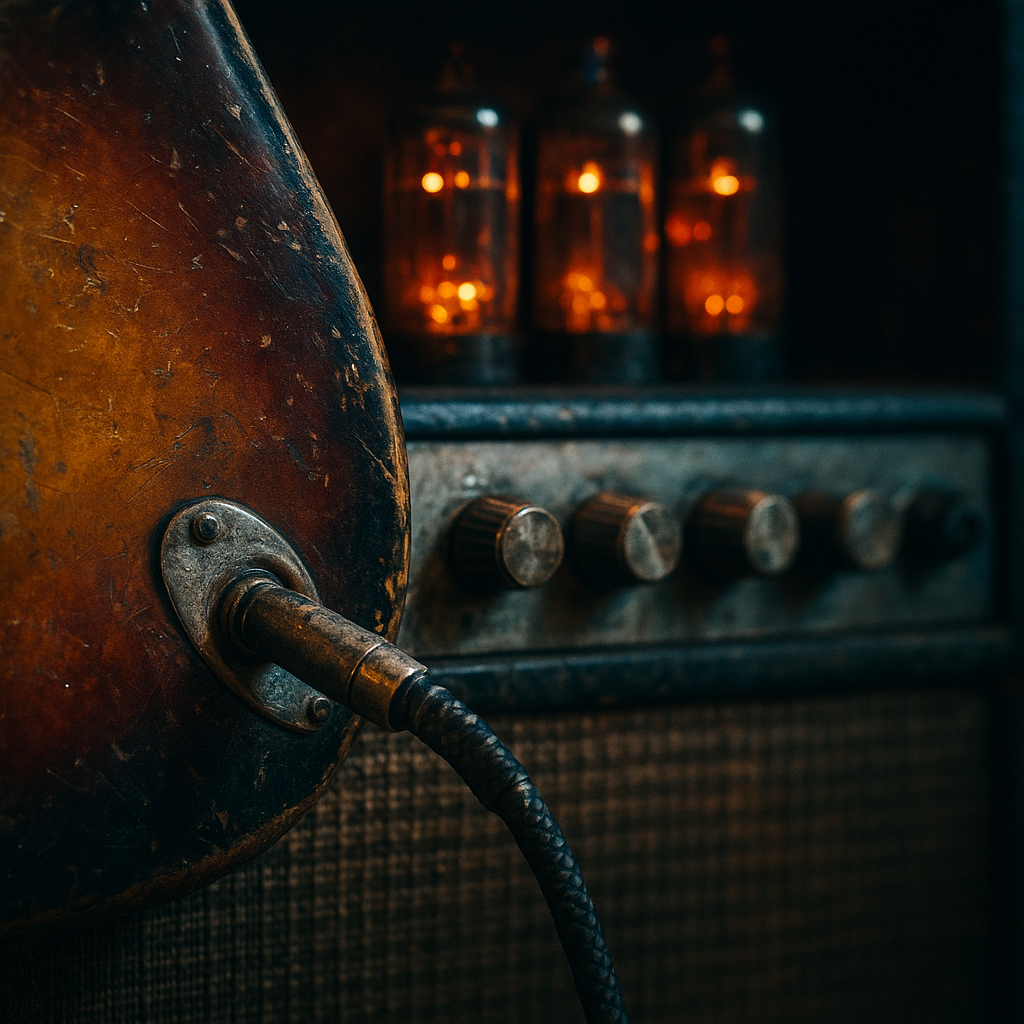
So what exactly is happening when a guitar signal gets distorted? At its core, distortion occurs when an audio signal is amplified beyond the capacity of the circuit, causing the waveform to “clip” or flatten at the peaks. This clipping creates additional harmonics — frequencies that weren’t in the original signal — which our ears perceive as grit, crunch, or fuzz.
There are several types of distortion, each with its own character:
- Overdrive: The mildest form, created by pushing tube amplifiers just past their clean limit. It produces a warm, smooth breakup that responds dynamically to your playing. Think classic blues and early rock.
- Distortion: More aggressive than overdrive, with harder clipping and more sustain. This is the sound of hard rock and early heavy metal — think AC/DC or Black Sabbath.
- Fuzz: The most extreme form, with heavily clipped, almost square-wave distortion. Fuzz creates a thick, buzzy, sometimes chaotic tone. Think Jimi Hendrix or The Smashing Pumpkins.
Modern distortion pedals use transistors, diodes, or digital modeling to recreate these sounds without needing to crank a massive amplifier. This made distortion accessible to bedroom guitarists and touring musicians alike, democratizing the sound that once required expensive, loud equipment.
The Golden Age: Distortion Defines Rock Genres
By the 1970s, distortion wasn’t just an effect — it was the defining characteristic of entire genres. Hard rock bands like Led Zeppelin, Deep Purple, and AC/DC built their sound around crunchy, overdriven riffs. Jimmy Page’s tone on “Whole Lotta Love” and Ritchie Blackmore’s on “Smoke on the Water” became instantly recognizable sonic signatures.
Then came heavy metal. Tony Iommi of Black Sabbath, playing with a detuned guitar and heavy distortion due to a finger injury, essentially invented the metal guitar tone. His dark, heavy riffs on songs like “Iron Man” and “Paranoid” created a template that metal guitarists still follow today.
Punk Rock: Distortion as Rebellion
In the mid-1970s, punk rock stripped rock music down to its raw essentials — and distortion was front and center. Bands like The Ramones, The Sex Pistols, and The Clash used aggressive, buzzy distortion to create a wall of sound that matched their anti-establishment attitude. Johnny Ramone’s relentless downstroke rhythm playing through a cranked Marshall stack became the punk guitar blueprint.
Punk proved that you didn’t need technical virtuosity to make powerful music. Three chords, a distorted guitar, and attitude were enough to change the world. The connection between politics and punk rock became inseparable, with distortion serving as the sonic embodiment of protest and defiance.
The 1980s: High Gain and Shredding
The 1980s brought high-gain amplifiers and a new level of technical precision. Eddie Van Halen revolutionized rock guitar with his “brown sound” — a thick, saturated distortion achieved by running a variac (variable voltage transformer) with his Marshall amp. His playing on “Eruption” and “Panama” inspired a generation of shredders.
Thrash metal bands like Metallica, Slayer, and Megadeth pushed distortion to even more extreme levels, using tight, palm-muted riffs and scooped midrange tones to create an aggressive, precise attack. The Mesa/Boogie Mark series amplifiers became the weapon of choice for metal guitarists seeking maximum gain and clarity.
Grunge and Alternative: Distortion Gets Dirty Again
Just when rock guitar was becoming polished and precise, grunge arrived in the early 1990s to mess it all up again. Bands like Nirvana, Soundgarden, and Alice in Chains embraced raw, fuzzy distortion that harked back to punk and early metal. Kurt Cobain’s use of cheap Boss DS-1 and Electro-Harmonix Big Muff pedals created a sludgy, aggressive tone that perfectly captured the angst of a generation.
“Smells Like Teen Spirit” became the anthem of the decade, and its quiet-loud-quiet dynamics — with explosive distorted choruses — influenced countless alternative rock bands. The Smashing Pumpkins took fuzz to orchestral heights on “Siamese Dream,” layering dozens of guitar tracks to create a massive, wall-of-sound approach.
Iconic Rock Songs With Distortion That Changed Music
Certain songs didn’t just use distortion — they defined what distortion could do. Here are some of the most influential distorted guitar moments in rock history:
- “Rocket 88” – Jackie Brenston (1951): The accidental birth of distorted guitar, thanks to a damaged amplifier.
- “You Really Got Me” – The Kinks (1964): Dave Davies’ slashed speaker created one of the first intentionally distorted rock riffs.
- “(I Can’t Get No) Satisfaction” – The Rolling Stones (1965): Keith Richards’ fuzz riff made the Maestro FZ-1 a must-have pedal.
- “Purple Haze” – Jimi Hendrix (1967): Hendrix’s psychedelic fuzz tone redefined what electric guitar could sound like.
- “Whole Lotta Love” – Led Zeppelin (1969): Jimmy Page’s thick, sustaining tone became the hard rock standard.
- “Paranoid” – Black Sabbath (1970): Tony Iommi’s heavy, dark distortion invented heavy metal guitar.
- “Back in Black” – AC/DC (1980): Angus Young’s crisp, punchy overdrive proved that less gain could be more powerful.
- “Smells Like Teen Spirit” – Nirvana (1991): Kurt Cobain’s raw fuzz brought distortion back to its rebellious roots.
- “Killing in the Name” – Rage Against the Machine (1992): Tom Morello’s innovative use of distortion and effects created a new sonic vocabulary.
Easy Distortion Guitar Songs for Beginners
Want to start playing with distortion yourself? These classic songs are perfect for beginners learning to control their tone and technique:
- “Smoke on the Water” – Deep Purple: The iconic riff is simple but teaches you about timing and palm muting.
- “Iron Man” – Black Sabbath: Slow, heavy, and perfect for practicing power chords with distortion.
- “Blitzkrieg Bop” – The Ramones: Three chords, fast downstrokes, and pure punk energy.
- “Come As You Are” – Nirvana: A great introduction to grunge tone and dynamics.
- “Seven Nation Army” – The White Stripes: Technically played with an octave pedal, but the distorted tone is unmistakable.
When starting out with distortion, remember that less is often more. Too much gain can make your playing sound muddy and undefined. Start with moderate settings and focus on clean technique — distortion will amplify both your good playing and your mistakes.
The Modern Era: Distortion in the Digital Age
Today’s guitarists have more distortion options than ever before. Digital modeling amplifiers and software plugins can recreate virtually any classic distortion tone, from vintage tube overdrive to modern high-gain brutality. Companies like Line 6, Kemper, and Neural DSP have made it possible to access hundreds of amp and pedal models in a single unit.
Yet despite all this technology, many guitarists still chase the organic warmth of real tube amplifiers and analog pedals. There’s something about the way tubes respond to your playing dynamics — cleaning up when you play softly, roaring when you dig in — that digital modeling is still working to perfectly replicate.
Modern genres continue to push distortion in new directions. Djent bands like Periphery use extended-range guitars and tight, percussive distortion. Stoner rock and doom metal bands like Sleep and Electric Wizard embrace massive, fuzzed-out tones. Indie rock bands use distortion as texture, layering fuzzy guitars to create atmospheric soundscapes.
Why Distortion Still Matters
More than 70 years after that broken amplifier in Memphis, distortion remains the heartbeat of rock music. It’s more than just an effect — it’s a form of expression, a way to convey emotion that clean tones simply can’t match. Distortion is aggression, passion, rebellion, and power all rolled into one.
The beauty of distortion is its versatility. It can be subtle and warm, adding just a hint of grit to a blues lick. It can be massive and crushing, creating walls of sound that physically move you. It can be fuzzy and psychedelic, transporting you to another dimension. Few musical tools offer such a wide range of emotional expression.
And perhaps most importantly, distortion represents the spirit of rock and roll itself: taking something broken or imperfect and turning it into something beautiful and powerful. It’s a reminder that sometimes the best innovations come from accidents, and that rules are meant to be broken. These milestone moments in rock history show how a single sonic accident can reshape entire decades of musical evolution.
Conclusion: The Enduring Power of Distortion
From Willie Kizart’s damaged amplifier to today’s digital modeling rigs, guitar distortion has come full circle. What started as a technical malfunction became the defining sound of rock music, shaping genres from blues and hard rock to punk, metal, and grunge.
The pioneers who embraced distortion — whether by accident or intention — understood something fundamental: music isn’t just about technical perfection. It’s about emotion, energy, and connection. Distortion gave guitarists a voice that could whisper or scream, soothe or assault, all within the same song.
Today, distortion continues to evolve. New generations of guitarists are finding fresh ways to use this 70-year-old effect, proving that some innovations never go out of style. Whether you’re cranking a vintage tube amp, stomping on a fuzz pedal, or dialing in a digital preset, you’re participating in a tradition that rewired music forever.
So the next time you hear a distorted guitar riff that makes your heart race, remember: it all started with a broken speaker and the vision to hear beauty in the chaos. That’s the true spirit of rock and roll.